
When sleep changes, the brain may already be changing
What Alzheimer’s disease can teach us — long before symptoms appear

Alzheimer’s disease is something many of us will encounter sooner or later.
In my personal life, it was the spark that led me to choose Biology. I needed to understand what was happening behind what I was seeing every day with my own eyes.
Alzheimer’s is a disease that doesn’t announce itself. It arrives quietly, bags in hand, settles into your life, and slowly begins to take things away: memories, habits, identity. At some point, even home no longer feels the same.
Today, Alzheimer’s research is moving forward: monoclonal antibodies, targeted proteins, new therapeutic approaches. But one of the greatest challenges in biomedical research remains the same — understanding the disease before symptoms become visible.
This is where biomarkers come in: measurable signals that allow us to detect changes in the brain when, from the outside, everything still looks normal.
And one of the most studied signals is sleep.
For a long time, sleep problems were considered a consequence of Alzheimer’s: the brain is already ill, therefore sleep worsens. But researchers began asking a subtler question:
What if changes in sleep are among the earliest signs that something is already shifting in the brain — even before memory problems appear?
In other words, the study we’re discussing today doesn’t simply ask whether people with Alzheimer’s sleep poorly. It asks whether specific alterations in sleep can emerge in the very early stages of the disease, when memory still seems intact and no clinical diagnosis has been made.
The study
This research comes from the Knight Alzheimer’s Disease Research Center at Washington University.
The researchers monitored the sleep of 119 individuals for six consecutive nights, using:
sleep diaries
actigraphy (a non-invasive method that tracks body movement to distinguish sleep and wakefulness)
frontal EEG recordings to measure brain activity during sleep
If Eternal Sunshine of the Spotless Mind comes to mind — yes, the image is roughly that one: people asleep in their own beds, electrodes attached, technicians observing what happens while we sleep.
But the key point of this study is not how long people sleep.
It’s how the brain sleeps.
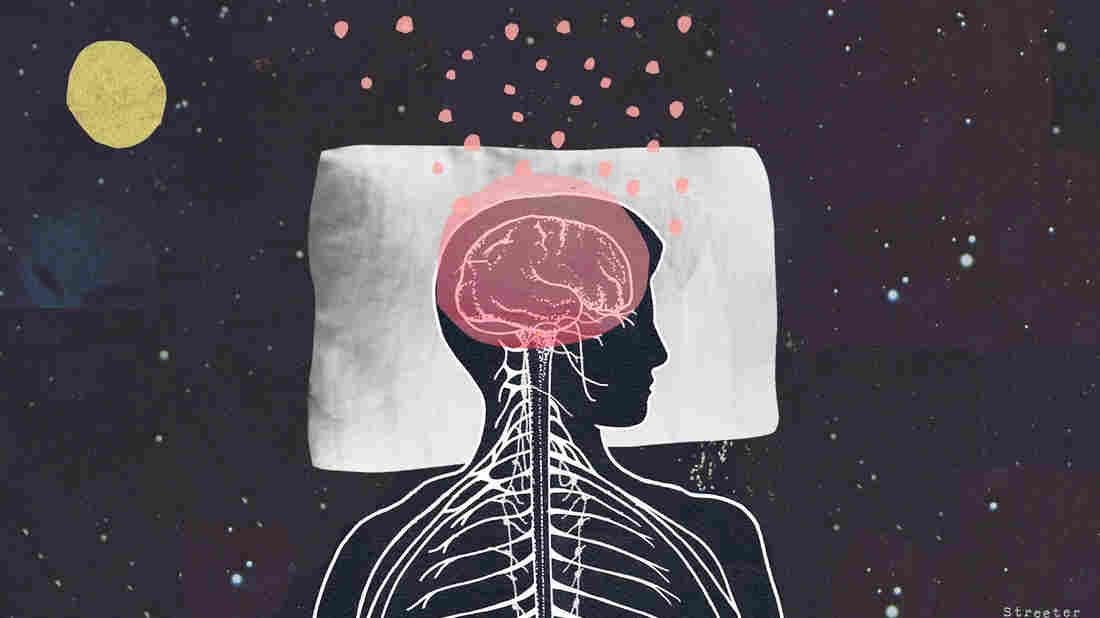
Why deep sleep matters
The researchers focused on NREM deep sleep, characterised by slow waves. These waves are considered essential for brain recovery and memory processes. They reflect the brain’s internal balance — meaning that even when total sleep duration appears normal, sleep quality may be profoundly altered.
Alongside sleep, the researchers assessed Alzheimer’s biomarkers, including those found in cerebrospinal fluid, and the Clinical Dementia Rating (CDR) scale, which ranges from 0 (no cognitive impairment) to 3 (severe dementia).
The results point to a clear pattern:
As biological signs of Alzheimer’s increase in the brain, the strength of slow-wave activity decreases.
This relationship remained consistent across different measurement techniques and held even after accounting for age, sex and cognitive performance.
Amyloid vs tau: not the same story
When looking at beta-amyloid, one of the proteins involved in Alzheimer’s, individuals with greater accumulation tended to:
fall asleep faster
enter REM sleep earlier
At the same time, deep sleep in frontal, temporal and parietal brain regions appeared weaker — an effect mainly detectable through EEG rather than other biomarkers.
The picture becomes even clearer when tau enters the scene.
Higher levels of tau were associated with a loss of sleep quality, particularly in deep slow-wave sleep — the truly restorative phase. People with more tau pathology tended to sleep longer and nap more during the day, yet their sleep was less effective.
More sleep — worse rest.
A paradox that led researchers to hypothesise that frequent daytime napping, especially when paired with unrefreshing night-time sleep, may represent an early signal of tau-related changes in the brain.
What does this mean?
This study has limitations. It cannot definitively establish whether sleep alterations precede or follow protein accumulation, and only a subset of participants underwent advanced imaging techniques.
Still, the fact that similar results emerge across different methods strengthens the link between deep sleep and Alzheimer’s pathology.
As Alzheimer’s cases rise in an ageing population, these findings open an intriguing perspective: sleep may offer an early window into what is happening in the brain — long before symptoms appear.
Not as a diagnostic tool, but as a biological signal worth observing, monitoring and understanding.
So I’ll leave you with a question rather than a conclusion:
What is your relationship with sleep? Do you really sleep — or do you simply pass time unconscious?

As Alexander Pope is quoted in Eternal Sunshine of the Spotless Mind:
“Blessed are the forgetful, for they get the better even of their blunders.”
If you made it this far, thank you. If you found this piece interesting, a like is the simplest way to let me know.
If you have questions, suggestions, or topics you’d like to see explored here, feel free to write to me.
Alessia